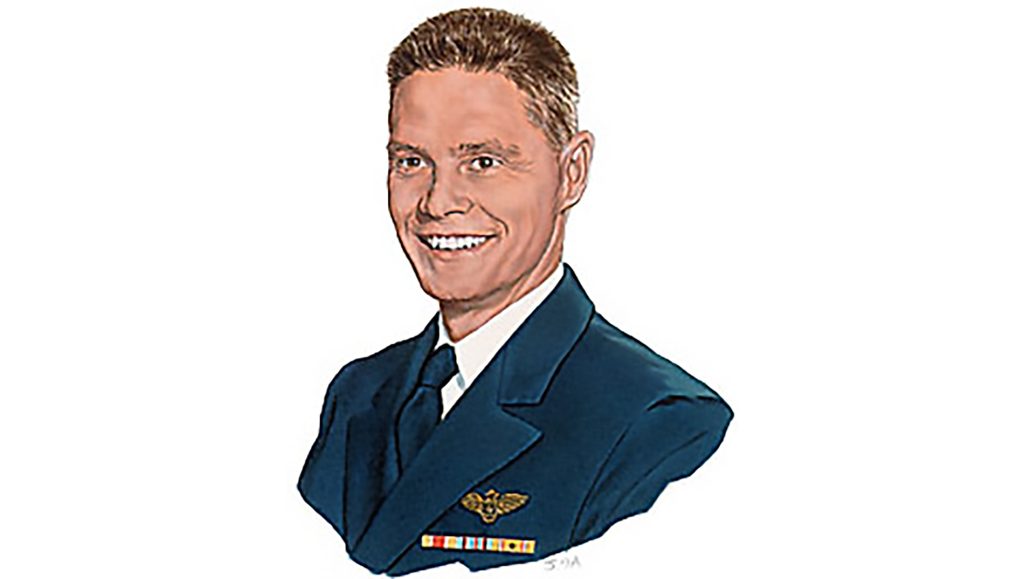
Today we remember Captain Robert C. “Bob” Truax, born September 3, 1917, one of the great original thinkers of American rocketry and a lifelong advocate for practical, reusable, and dramatically lower-cost access to space.
Truax became fascinated with rockets as a teenager after reading about Robert Goddard’s experiments in Popular Mechanics. While attending the United States Naval Academy, he began designing and testing liquid-fueled rocket engines at a time when rocketry was still regarded by much of the establishment as speculative or eccentric. Between 1936 and 1939, he constructed and tested several experimental motors, published technical reports through the American Rocket Society, and demonstrated one of his thrust chambers to members of the British Interplanetary Society.
During the early 1940s, Truax established a Navy program to develop jet-assisted takeoff systems for aircraft. It was during this work that he served alongside Robert H. Goddard, the father of modern liquid-fueled rocketry. Truax and Goddard worked side by side for approximately a year on competing JATO designs for the Navy’s Bureau of Aeronautics. Faced with the need for a rocket engine that could be throttled, idled, or restarted, Truax developed control and propellant-feed systems using the pioneering hypergolic combination of red fuming nitric acid and aniline.
That direct connection placed Truax within the first generation of American liquid-rocket development. He was not merely inspired by Goddard from a distance. He worked beside him while modern rocket propulsion was still being invented.
Truax went on to organize the propulsion laboratory at the U.S. Naval Missile Test Center at Point Mugu, lead rocket development within the Navy’s Bureau of Aeronautics, and advocate for submarine-launched ballistic missiles before the Navy formally embraced what became the Polaris program. He later headed early development of the Thor intermediate-range ballistic missile and contributed to the Air Force’s first major satellite program.
After retiring from the Navy as a captain in 1959, Truax joined Aerojet-General, where he led advanced-development work and pursued one of his most ambitious concepts: Sea Dragon, an enormous, reusable, sea-launched rocket intended to place very large payloads into orbit at radically lower cost. In 1966, he founded Truax Engineering and continued developing sea-launched systems including Excalibur.
He also became widely known for designing the steam-powered Skycycle used in Evel Knievel’s 1974 attempt to cross the Snake River Canyon. Later, Truax pursued the privately financed Volksrocket, seeking to demonstrate that ordinary citizens could reach space without the immense budgets and bureaucracy traditionally associated with government launch programs.
Behind the varied projects was one consistent belief: humanity’s future in space depended upon making launch affordable, reusable, and accessible. Truax understood that the dominant approach to rocketry was too expensive and too cumbersome to support large-scale human activity beyond Earth. Many of his ideas were dismissed as too unconventional, only to reappear decades later as central goals of the modern launch industry.
His achievements earned him the Robert H. Goddard Award for outstanding work in liquid-propellant rocketry, the Legion of Merit for his work related to the Polaris concept, the presidency of the American Rocket Society, and induction into the Air Force Space and Missile Pioneers Hall of Fame. The Smithsonian National Air and Space Museum now preserves his papers, technical drawings, correspondence, photographs, and business records.
Bob Truax died on September 17, 2010, at the age of 93. He left behind more than rockets and drawings. He left an example of intellectual independence, engineering courage, and persistence in the face of institutions that repeatedly failed to recognize how far ahead of them he truly was.
Happy birthday, Bob Truax. Your work continues to inspire those who believe that access to space must become practical, affordable, and available at scale.